


Please Leave Us A Message

Haoyong Automotive Controls
Yes, a bad AC actuator can sometimes drain a vehicle's battery, but it is not the most common cause of battery discharge. The problem usually occurs when a faulty actuator continues trying to move an HVAC door after the vehicle has been turned off. If the motor remains energized or the HVAC control system fails to enter its normal sleep state, it can create a parasitic electrical draw.
A failing actuator may also produce an AC actuator clicking noise, cause the air temperature to remain incorrect, or make the HVAC system unable to change between different airflow positions. Understanding the relationship between an actuator problem and battery drain can help you identify the real cause before replacing parts unnecessarily.
An AC actuator is a small electrically operated motor and gear assembly used in a vehicle's heating, ventilation, and air conditioning system. Depending on the vehicle design, different actuators control different HVAC doors.
A blend Door Actuator, for example, controls the position of a door that regulates the mixture of heated and cooled air entering the cabin. Other actuators can control airflow direction or fresh-air and recirculation functions.
These actuators receive commands from the HVAC control system. When you change the temperature or airflow setting, the actuator moves the corresponding door to the requested position. Because the actuator is located inside or directly attached to the HVAC housing, it is generally hidden behind the dashboard.
A faulty AC actuator can contribute to battery drain when it continuously consumes electrical power after the vehicle is switched off. This situation is generally associated with an actuator that is mechanically stuck, electrically defective, or unable to report its correct position to the HVAC control system.
Normally, the actuator should move to the commanded position and stop. After the vehicle's electronic modules enter their normal sleep state, the HVAC system should consume very little power. If an actuator repeatedly attempts to move because its gears are damaged or the HVAC system cannot determine its position, the circuit may remain active longer than expected.
This does not mean every bad AC actuator will drain a battery. In many cases, the actuator simply stops working correctly while the rest of the vehicle's electrical system operates normally.
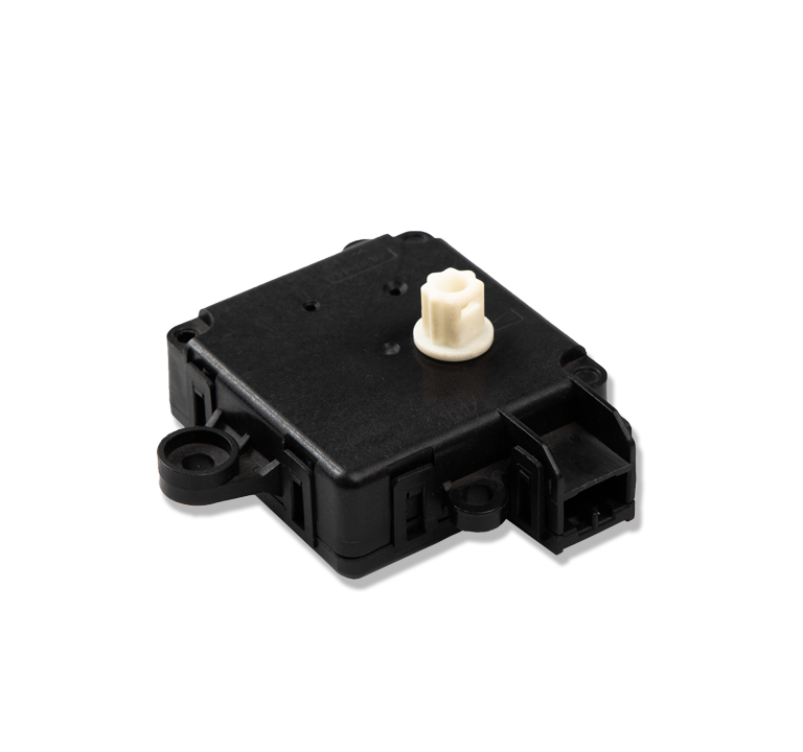
There are several possible mechanisms behind an actuator-related battery drain.
An actuator contains a small electric motor and gears. If the internal gears are stripped or the HVAC door is physically stuck, the motor may repeatedly attempt to reach the commanded position.
This repeated movement can prevent the actuator or its control circuit from settling into its normal inactive state. In some vehicle designs, this can contribute to excessive parasitic current after the ignition is switched off.
An AC actuator stuck in one position may continue receiving commands from the HVAC control module. The actuator may try to move but fail because the door or linkage cannot travel normally.
A stuck door is important to distinguish from a defective actuator. The actuator may be functioning electrically while the HVAC door itself is binding or damaged.
An internal electrical fault in the actuator can also create an abnormal current path. Depending on the vehicle's electrical design, a shorted motor, damaged position sensor, or wiring problem can prevent the circuit from shutting down normally.
For this reason, battery drain should be diagnosed as an electrical-system problem rather than automatically blaming the actuator.
A battery that repeatedly goes dead is not enough to confirm an actuator problem. Look for additional HVAC symptoms.
Repeated clicking or tapping behind the dashboard
Air temperature does not respond to the temperature setting
Air remains stuck on hot or cold
Airflow does not change between dash, floor, and defrost vents
Different temperatures come from the driver and passenger vents
The HVAC system behaves differently after restarting the vehicle
The actuator continues making noise after the ignition is switched off
One of the most recognizable symptoms is an AC actuator clicking noise. Repetitive clicking often occurs when damaged gears slip or when an actuator repeatedly reaches a travel limit. However, clicking can also result from a stuck HVAC door, calibration issue, wiring problem, or another actuator.
An actuator uses a series of small gears to convert the motor's rotation into movement of an HVAC door. If the plastic gears become worn or stripped, the motor may continue rotating while the door does not move correctly.
The result can be a repetitive clicking or tapping sound. The noise may become noticeable when the vehicle starts, when the temperature setting is changed, or when the airflow mode is adjusted.
An AC actuator clicking noise is therefore a useful diagnostic clue, but it should not be treated as definitive proof that the actuator itself has failed.
A parasitic draw test is normally required to determine whether a vehicle has excessive electrical consumption after shutdown.
A technician can allow the vehicle's electronic modules to enter their normal sleep state and then measure the current draw from the battery. If the draw remains abnormally high, individual circuits can be isolated using the vehicle's fuse and wiring information.
If disconnecting the HVAC Actuator circuit causes the excessive current draw to disappear, the actuator, wiring, or associated control module can then be investigated further.
This testing approach is more reliable than replacing an actuator simply because the battery is weak. A worn battery, alternator problem, interior light, aftermarket electronics, door module, or another electronic component can also cause battery discharge.
Yes. In fact, this is a common type of actuator failure. An AC actuator not working may simply leave the HVAC door in one position.
For example, a failed blend door actuator can leave the air stuck on full heat or full cold even though the air conditioning compressor and blower motor are functioning normally.
In this situation, the actuator may no longer move but may not consume enough power to cause a noticeable battery drain. The HVAC problem and the battery problem should therefore be diagnosed separately unless testing shows a direct electrical connection.
If the vehicle has both a dead battery and HVAC Actuator symptoms, start by documenting when the battery loses charge. Note whether the actuator clicks after the vehicle is shut off, whether the sound comes from behind the dashboard, and whether the HVAC controls work normally while driving.
A professional technician can then perform a parasitic draw test and inspect the HVAC Actuator circuit. If an actuator is confirmed as the source, replacing the defective unit may resolve both the HVAC problem and the abnormal electrical draw.
So, can a bad AC actuator drain a battery? It can, but only under certain failure conditions. An actuator that remains energized, repeatedly attempts to move, or has an internal electrical fault may contribute to excessive parasitic draw after the vehicle is turned off.
However, most actuator failures are first noticed through HVAC symptoms such as incorrect temperature control, an AC actuator clicking noise, or an AC actuator not working. If you also have a battery drain, a proper electrical test should be used to confirm whether the actuator is actually responsible.
Because actuator designs and HVAC electrical systems vary between vehicles, the exact diagnostic procedure should always follow the manufacturer's service information for the specific make, model, year, and HVAC configuration.

Mr. Hansol Kim