


Please Leave Us A Message

Haoyong Automotive Controls
A car AC actuator is a small electric motor that controls the movement of air doors inside a vehicle's HVAC system. By opening and closing different doors, it regulates airflow direction, air temperature, and air recirculation to provide a comfortable driving environment. Whether you want cool air from the dashboard vents or warm air on the windshield for defrosting, the AC actuator works together with the blend Door Actuator and the HVAC Actuator to ensure the air is delivered exactly where it is needed. Understanding how these components work can help you recognize early signs of failure and maintain your vehicle's climate control system more effectively.
A car AC actuator is an essential component of a vehicle's heating, ventilation, and air conditioning (HVAC) system. Although it is small in size, it plays a major role in controlling the comfort of the cabin.
The actuator receives electronic signals from the climate control module and converts them into mechanical movement. This movement adjusts various air doors inside the HVAC housing, allowing the system to control airflow, temperature, and ventilation modes automatically.
Modern vehicles typically use multiple actuators within the HVAC system, each responsible for a different function. Together, they ensure that the driver's selected temperature and airflow settings are accurately maintained.
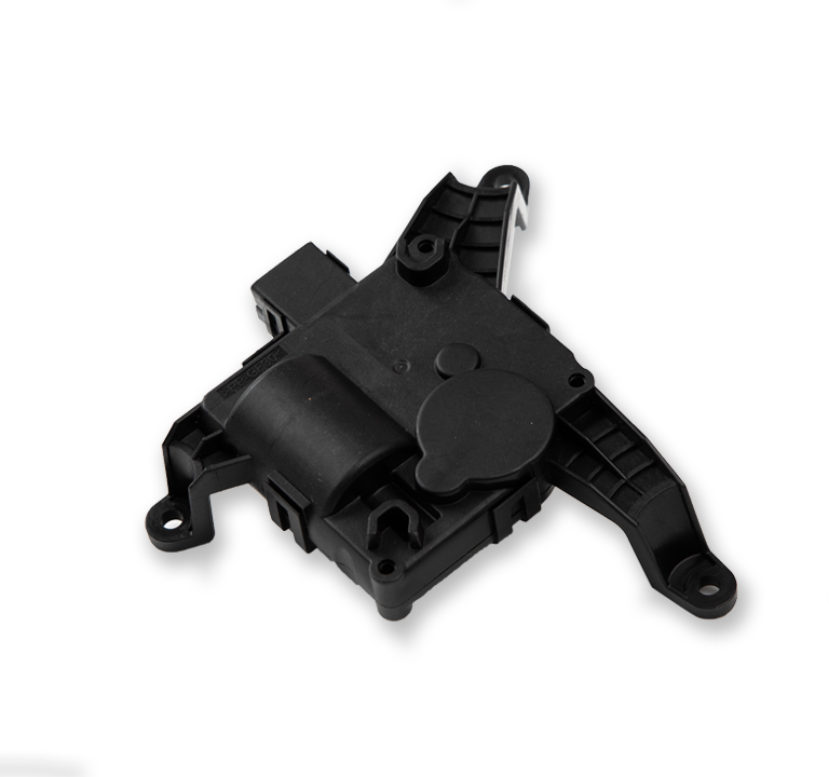
The primary function of an AC actuator is to move internal doors within the HVAC system.
These doors determine:
Which air vents receive airflow
Whether air passes through the heater core or evaporator
Whether outside air or cabin air is circulated
The balance between driver and passenger temperature zones
When you change the airflow direction from dashboard vents to floor vents or windshield defrost mode, the actuator rotates a gear mechanism that repositions the corresponding air door.
Because the process is electronically controlled, modern HVAC systems can make precise adjustments quickly and quietly, providing consistent cabin comfort.
Many people use these terms interchangeably, but they are not exactly the same.
An AC actuator is a general term that refers to any actuator operating within the HVAC system.
A blend door actuator is a specific type of actuator responsible for mixing hot and cold air to achieve the desired cabin temperature.
For example:
AC actuator controls airflow functions.
Blend door actuator controls air temperature.
Mode door actuator controls vent selection.
Recirculation actuator controls fresh air and cabin air circulation.
Each actuator performs a unique task while working together as part of the complete HVAC system.
An HVAC Actuator refers to any electric actuator used within the heating, ventilation, and air conditioning system.
Depending on the vehicle model, one HVAC system may contain several actuators, including:
Blend door actuator
Mode door actuator
Recirculation door actuator
The HVAC control module continuously communicates with these actuators, allowing the system to automatically respond to driver inputs and environmental conditions.
Advanced vehicles with dual-zone or tri-zone climate control may use even more actuators to independently regulate temperatures for different seating areas.
Like any electric component, an AC actuator can wear out over time.
Some common causes include:
Worn plastic gears
Burned-out electric motors
Internal position sensor failure
Electrical wiring problems
Water or moisture damage
Normal aging and frequent use
Since the actuator operates every time the HVAC settings change, continuous movement eventually leads to mechanical wear.
A properly functioning actuator provides more than just comfort. It helps maintain consistent cabin temperature, improve defrosting performance, enhance air circulation, increase passenger comfort, and improve the overall efficiency of the HVAC system.
A faulty actuator can reduce heating and cooling performance while making the entire climate control system less effective. Regular inspections during vehicle maintenance can help identify actuator problems before they become more expensive repairs.
If replacement becomes necessary, selecting a high-quality actuator is important.
Look for products that offer:
OEM-quality performance
Durable engineering plastics
Precision electric motors
Accurate position sensors
Long service life
Vehicle-specific compatibility
For automotive parts distributors, repair shops, and vehicle manufacturers, working with an experienced AC actuator manufacturer ensures reliable product quality and consistent performance.
A car AC actuator is a critical part of every modern vehicle's HVAC system. It controls airflow by moving internal air doors, allowing drivers to adjust temperature, ventilation, and air distribution with precision. Along with the blend door actuator and other HVAC actuator components, it keeps the vehicle comfortable in every season. Understanding how these actuators work and recognizing early signs of wear can help vehicle owners maintain optimal climate control performance while avoiding unexpected repair costs.
An AC actuator controls the movement of doors inside a vehicle's HVAC system. It adjusts airflow direction, regulates cabin temperature through the blend door, and manages fresh or recirculated air based on the driver's climate control settings.
Common symptoms of a bad AC actuator include clicking noises behind the dashboard, incorrect airflow direction, inconsistent cabin temperature, warm air when cooling is selected, difficulty switching between vents, and poor defrost performance. If these symptoms appear, inspecting or replacing the actuator is recommended to restore proper HVAC operation.

Mr. Hansol Kim