


Please Leave Us A Message

Haoyong Automotive Controls
In precision optical and industrial systems,Mirror Actuators play a critical role in controlling positioning,alignment,and movement accuracy.Buyers and engineers often face a key decision during system design:whether to choose a standard Mirror Actuator or invest in a Custom Medium Mirror Actuator.While both options serve similar basic functions,the performance,flexibility,and long-term value can differ significantly depending on application requirements.
A standard mirror actuator is typically designed for general-purpose use.It follows predefined specifications in terms of size,stroke length,torque,mounting interface,and control method.These actuators are mass-produced and readily available,making them suitable for applications with minimal customization needs.For simple optical alignment tasks or non-critical positioning systems,standard mirror actuators may provide acceptable performance at a lower initial cost.
However,as optical systems become more complex and precision requirements increase,limitations of standard mirror actuators become more apparent.This is where a Custom Medium Mirror Actuator offers a clear advantage.Instead of adapting your system to the actuator,customization allows the actuator to be designed around the system itself.Parameters such as load capacity,movement resolution,response speed,and mounting geometry can be optimized to meet exact operational needs.
One of the most significant differences lies in precision control.A Custom Medium Mirror Actuator is engineered to deliver higher positioning accuracy and repeatability.In laser systems,optical inspection equipment,and scanning platforms,even micron-level deviations can compromise performance.Custom designs allow tighter tolerances,improved feedback mechanisms,and better integration with servo or stepper motor control systems,ensuring stable and precise mirror movement.
Another important distinction is adaptability to application environments.Standard mirror actuators are built to operate within generic environmental ranges.In contrast,a Custom Medium Mirror Actuator can be tailored to withstand specific temperature variations,vibration levels,or long-duty cycles.This makes customized solutions particularly valuable in industrial automation,medical imaging,and high-end optical equipment where reliability under continuous operation is essential.
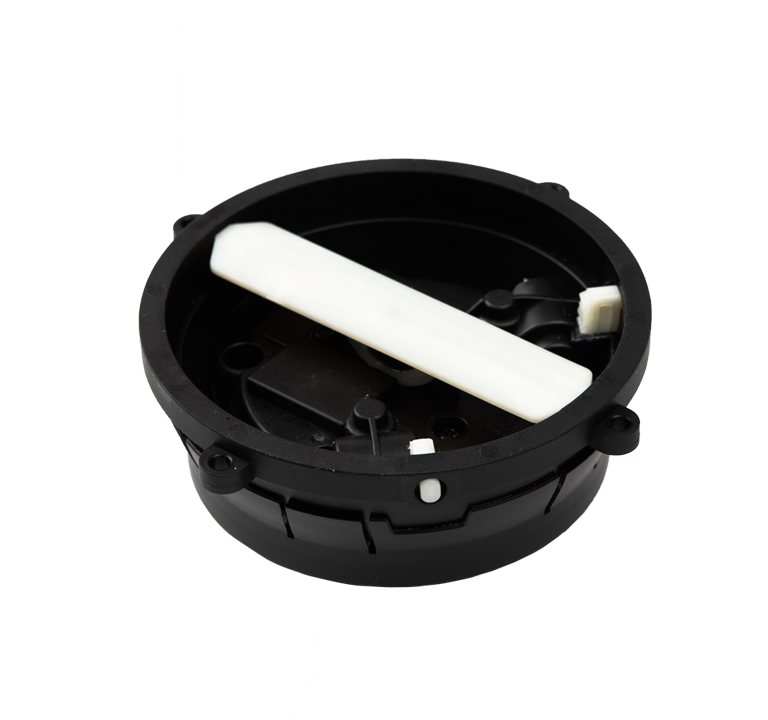
Mechanical compatibility is also a major factor.Standard actuators often require additional brackets,adapters,or compromises in system layout.A Custom Medium Mirror Actuator can be designed with dedicated mounting interfaces,optimized housing dimensions,and customized shaft or linkage structures.This not only simplifies installation but also improves structural stability and alignment accuracy over time.
From a performance perspective,load handling capability is another area where customization stands out.Medium mirror applications often involve mirrors that are heavier or larger than those used in compact systems.A Custom Medium Mirror Actuator can be engineered to balance torque output,speed,and load stability,reducing mechanical stress and extending service life.
Cost considerations often lead buyers to initially favor standard mirror actuators.While standard units may have a lower upfront price,they can introduce hidden costs over time.Performance limitations,premature wear,frequent adjustments,or system inefficiencies may result in higher maintenance and redesign expenses.A Custom Medium Mirror Actuator,although requiring an initial design investment,often delivers better long-term value by improving system efficiency and reducing operational risks.
Integration flexibility further differentiates customized solutions.Custom Medium Mirror Actuators can be developed to support specific communication protocols,feedback sensors,or control algorithms.This level of integration is rarely achievable with off-the-shelf standard actuators,especially in advanced optical or automated systems.
In summary,the choice between a standard mirror actuator and a Custom Medium Mirror Actuator depends on system complexity,precision requirements,and long-term performance expectations.Standard actuators remain suitable for basic applications with limited demands.However,for systems where accuracy,stability,and customization are critical,a Custom Medium Mirror Actuator provides superior adaptability,performance,and reliability.For manufacturers and system integrators seeking optimized optical control,customization is often the most strategic choice.

Mr. Hansol Kim