


Please Leave Us A Message

Haoyong Automotive Controls
In modern vehicles,the door mirror system has evolved far beyond simple manual adjustment.Today’s drivers expect smooth,precise,and quiet mirror control,even in compact vehicles or cost-sensitive models.At the heart of this system lies the motor,a critical component that directly determines performance,durability,and user experience.Understanding the different motor types used in a door Mirror Actuator is essential for automotive engineers,buyers,and brands sourcing an electric door Mirror Actuator for mass production or aftermarket applications.
A typical automotive door Mirror Actuator relies on a compact electric motor to convert electrical energy into controlled mechanical movement.This movement allows the mirror glass to adjust horizontally and vertically,often thousands of times over the vehicle’s lifespan.While the function may appear simple,the choice of motor has a major impact on precision,noise level,power consumption,and long-term reliability.
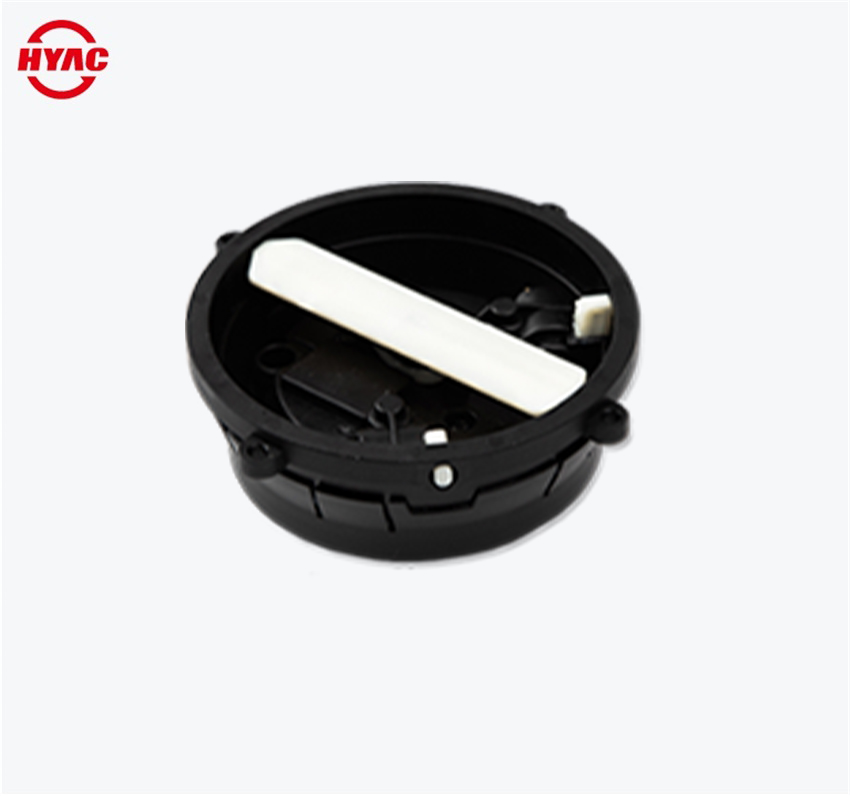
One of the most commonly used motor types in an electric door mirror actuator is the brushed DC motor.This motor type has been widely adopted across the automotive industry due to its simple structure,low cost,and ease of control.Brushed DC motors provide stable torque at low speeds,which is ideal for mirror adjustment where smooth and predictable movement is required.For many standard passenger vehicles,especially entry-level and mid-range models,brushed motors remain a practical solution.
However,brushed motors do have inherent limitations.The presence of brushes leads to mechanical wear over time,which can reduce lifespan and introduce electrical noise.In vehicles where mirrors are frequently adjusted,such as fleet cars or commercial vehicles,this wear can become a concern.This is why automotive brands working with an experienced OEM door mirror actuator supplier often evaluate usage scenarios before finalizing motor selection.
Another motor type increasingly seen in automotive door mirror actuator designs is the brushless DC motor.Brushless motors eliminate physical brushes by using electronic commutation,which significantly reduces wear and improves efficiency.These motors are quieter,more energy-efficient,and typically have a longer service life.As vehicles move toward higher levels of comfort and electrification,brushless motors are gaining attention,particularly in premium models.
That said,brushless motors also introduce higher costs and more complex control systems.The electronic driver circuitry required to operate them adds to the total system cost,which may not align with budget constraints for certain vehicle segments.For this reason,many manufacturers still reserve brushless motor solutions for vehicles where low noise,high durability,and premium user experience are top priorities.
Stepper motors represent another option used in certain automotive door mirror actuator designs.Unlike DC motors,stepper motors move in discrete steps,offering precise position control without the need for feedback sensors.This precision makes them attractive for applications where exact mirror positioning is critical.In theory,stepper motors can provide consistent performance over time,which is appealing for advanced mirror systems.
In practice,stepper motors tend to be bulkier and more expensive than small DC motors.They also consume more power when holding position,which can be a drawback in automotive electrical systems where efficiency matters.As a result,stepper motors are less common in standard electric door mirror actuator applications but may appear in specialized or experimental designs.
From a sourcing perspective,the motor choice directly influences how an automotive door mirror actuator performs under real-world conditions.Temperature extremes,humidity,vibration,and voltage fluctuations all challenge motor reliability.An experienced OEM door mirror actuator supplier will typically conduct endurance testing,thermal cycling,and noise evaluation to ensure the selected motor performs consistently throughout the vehicle’s service life.
Another important factor is integration with the overall actuator mechanism.The motor must work harmoniously with the gear system,housing materials,and electrical connectors.Even a high-quality motor can underperform if it is not properly matched to the actuator’s mechanical design.This is why many automotive brands prefer suppliers who offer complete actuator solutions rather than sourcing motors and housings separately.
As vehicle platforms become more global,standardization also plays a role in motor selection.Automotive manufacturers increasingly look for automotive door mirror actuator designs that can be used across multiple models and markets.This often means balancing cost,performance,and durability to create a versatile solution that meets diverse regulatory and consumer expectations.
In the future,motor technology for electric door mirror actuator systems is likely to continue evolving.Advances in materials,control electronics,and manufacturing processes will further improve efficiency and reduce noise.For buyers and engineers,understanding the differences between motor types is not just a technical exercise—it is a strategic decision that affects cost control,customer satisfaction,and long-term brand reputation.
Choosing the right motor ultimately requires close collaboration with a reliable OEM door mirror actuator supplier who understands both engineering requirements and market realities.With the right partner,automotive brands can ensure their door mirror systems deliver smooth,reliable performance throughout the vehicle’s lifecycle.

Mr. Hansol Kim