


Please Leave Us A Message

Haoyong Automotive Controls
Within an automotive door Mirror Actuator,gears play a role that is just as critical as the motor itself.While the motor generates motion,it is the gear system that translates this motion into controlled,precise mirror adjustment.One of the most common questions faced by engineers and buyers is whether plastic or metal gears are the better choice for an electric door Mirror Actuator.The answer depends on performance expectations,cost targets,and real-world usage conditions.
Plastic gears have become increasingly popular in modern automotive door Mirror Actuator designs.Advances in engineering plastics,such as reinforced nylon and POM,have significantly improved strength,wear resistance,and dimensional stability.These materials allow plastic gears to perform reliably under the moderate loads typical of mirror adjustment mechanisms.
One of the key advantages of plastic gears is noise reduction.Plastic materials naturally dampen vibration,resulting in quieter operation.For many automotive brands,minimizing noise during mirror adjustment is a priority,especially in passenger vehicles where comfort is a selling point.This is one reason plastic gears are widely used in electric door mirror actuator systems for mass-market vehicles.
Weight reduction is another benefit.Plastic gears are lighter than metal alternatives,contributing to overall vehicle weight reduction.While the weight savings from a single automotive door mirror actuator may seem small,automotive manufacturers often optimize every component to meet efficiency and emissions targets.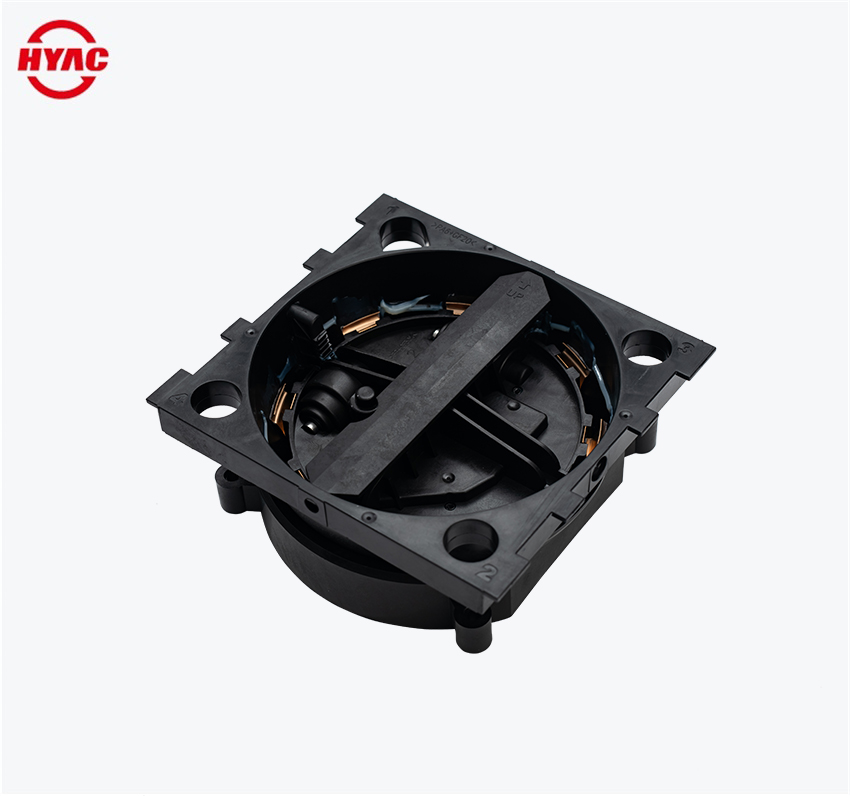
Cost is also a major factor.Plastic gears can be produced through injection molding,enabling high-volume manufacturing with consistent quality and lower unit costs.For an OEM door mirror actuator supplier serving large-scale automotive production,plastic gears offer a cost-effective solution without compromising essential performance.
Despite these advantages,plastic gears are not without limitations.Under extreme temperatures or prolonged high-load conditions,plastic materials can experience wear or deformation.In regions with very hot climates or in vehicles where mirrors are frequently adjusted,long-term durability must be carefully evaluated.This is why material selection and gear design are critical aspects of actuator engineering.
Metal gears,on the other hand,are known for their strength and durability.Typically made from steel,brass,or sintered metal,these gears can handle higher loads and resist wear over extended periods.In applications where robustness is the top priority,metal gears may appear to be the safer choice.
However,metal gears introduce their own challenges.They tend to generate more noise during operation,which can negatively impact perceived quality.Additional lubrication is often required to reduce friction and wear,increasing maintenance considerations.Metal gears are also heavier and more expensive to manufacture,particularly when tight tolerances are required.
In many modern automotive door mirror actuator designs,a hybrid approach is used.Plastic gears may be combined with metal components in areas where strength is critical,achieving a balance between durability and noise reduction.This approach allows manufacturers to optimize performance while controlling costs.
From a buyer’s perspective,the decision between plastic and metal gears should not be made in isolation.The overall system design,including motor type,housing material,and intended vehicle segment,must all be considered.An experienced OEM door mirror actuator supplier will evaluate these factors holistically and recommend the most suitable configuration.
Environmental conditions also play a role.Automotive door mirror actuator systems are exposed to moisture,dust,and temperature fluctuations.Plastic gears offer good corrosion resistance,while metal gears require surface treatments or coatings to prevent rust.These considerations directly affect long-term reliability and warranty performance.
As automotive technology advances,plastic gear materials continue to improve.Reinforced polymers and precision molding techniques are closing the performance gap between plastic and metal gears.For many electric door mirror actuator applications,high-quality plastic gears now provide an optimal balance of quiet operation,durability,and cost efficiency.
Ultimately,the choice between plastic and metal gears is about matching the actuator design to the vehicle’s intended use and market positioning.With the support of a knowledgeable OEM door mirror actuator supplier,automotive brands can confidently select gear systems that deliver reliable performance,enhance user experience,and align with production goals.

Mr. Hansol Kim