


Please Leave Us A Message
Haoyong Automotive Controls
When designing or upgrading an optical positioning system, selecting the right Mirror Actuator directly affects system accuracy and operational stability. Many buyers initially consider standard Mirror Actuators due to their availability and lower purchase cost. However, a growing number of industries are shifting toward Custom Medium Mirror Actuator solutions as system requirements become more specialized and performance-driven.
Standard mirror actuators are typically built to meet average market needs. They come with fixed specifications that work well in basic alignment or low-load applications. For projects with limited technical constraints, these actuators provide a convenient and fast solution. However, their standardized nature means compromises are often required during system integration, especially when dealing with medium-sized mirrors or complex motion profiles.
A Custom Medium Mirror Actuator, on the other hand, is developed with a specific application in mind. Instead of forcing the system to adapt to a fixed actuator design, customization allows engineers to define critical parameters such as stroke length, torque output, resolution, and mounting configuration. This design freedom ensures the actuator performs optimally within the actual operating environment.
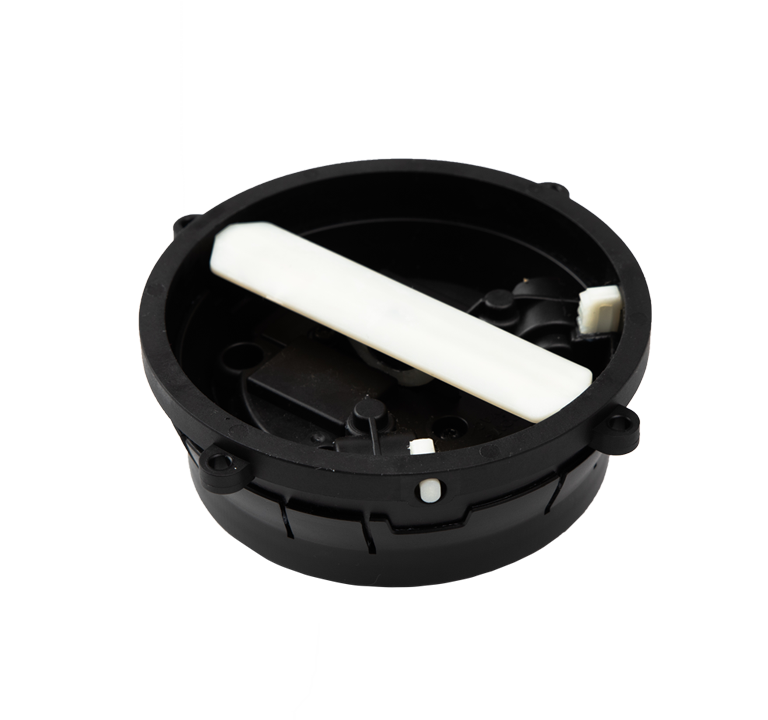
Precision is one of the most decisive differences. In applications like laser scanning, optical measurement, and imaging systems, consistent mirror positioning is essential. Custom Medium Mirror Actuators can incorporate high-precision bearings, optimized drive mechanisms, and advanced feedback systems to achieve superior accuracy and repeatability compared to standard models.
Durability and lifespan are also key considerations. Standard mirror actuators are designed for general usage patterns and may not perform well under continuous operation or higher load conditions. A Custom Medium Mirror Actuator can be engineered with reinforced materials, improved thermal management, and application-specific load distribution, significantly extending service life and reducing downtime.
Another important advantage lies in system integration. Customized actuators can be matched precisely to existing mechanical structures and control architectures. Whether the system uses servo motors, stepper motors, or closed-loop feedback control, a Custom Medium Mirror Actuator can be designed to integrate seamlessly, minimizing signal loss, response delay, or mechanical backlash.
Environmental adaptability further separates custom solutions from standard ones. In industrial or medical environments, factors such as temperature fluctuation, vibration, and cleanliness requirements must be considered. Custom Medium Mirror Actuators can be built to meet these specific conditions, ensuring stable performance where standard actuators may struggle.
From a procurement perspective, standard mirror actuators appear cost-effective in the short term. However, when evaluating total cost of ownership, customization often proves more economical. Reduced system modification, fewer performance issues, and lower maintenance requirements contribute to long-term savings. This is why many OEMs and equipment manufacturers increasingly prefer Custom Medium Mirror Actuator solutions for medium-scale optical systems.
Scalability is another often-overlooked factor. Custom actuator designs allow for easier future upgrades or modifications as system requirements evolve. This flexibility is difficult to achieve with standardized products that offer limited configuration options.
Ultimately, the difference between a standard mirror actuator and a Custom Medium Mirror Actuator is not just about customization—it is about system optimization. Standard actuators serve as general-purpose components, while custom actuators function as engineered solutions tailored to real-world performance demands. For applications where precision, reliability, and integration matter, choosing a Custom Medium Mirror Actuator is a strategic investment that enhances overall system value.

Mr. Hansol Kim