


Please Leave Us A Message

Haoyong Automotive Controls
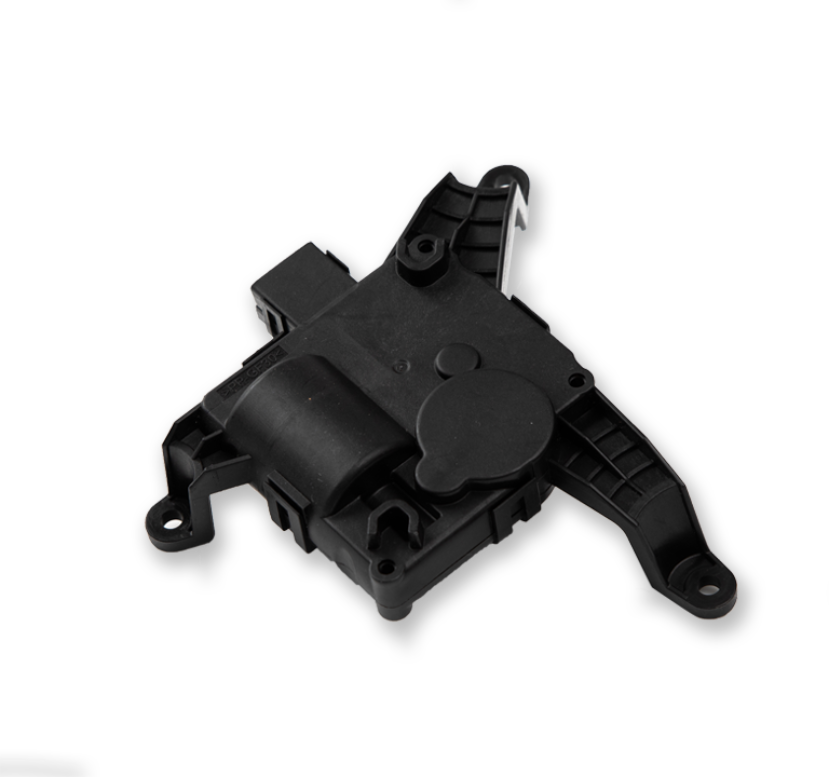
An AC actuator is an electromechanical device that uses alternating current (AC) power to generate motion and control mechanical systems. It converts electrical energy into either rotary or linear movement, allowing equipment such as valves, dampers, gates, and industrial machinery to operate automatically. AC Actuators are widely used in HVAC systems, manufacturing plants, water treatment facilities, power stations, and building automation applications where reliable and continuous operation is required.
The primary function of an AC Actuator is to move or position a mechanical component without manual intervention. By receiving an electrical signal, the actuator activates an internal motor and gear mechanism, which then produces controlled motion. This automation improves efficiency, reduces labor requirements, and enhances system accuracy.
An AC actuator typically consists of several key components, including an AC motor, gearbox, control circuit, housing, and position feedback system. When alternating current is supplied to the actuator, the motor begins to rotate. The gearbox reduces motor speed while increasing torque, allowing the actuator to move heavy loads or operate valves and dampers with precision.
Depending on the application, the actuator may produce rotary motion or linear motion. Rotary actuators rotate a shaft through a specified angle, such as 90 degrees for quarter-turn valves. Linear actuators create straight-line movement, making them suitable for applications such as gate control, lifting mechanisms, and industrial automation systems.
Many modern AC actuators include limit switches that stop movement when the desired position is reached. Advanced models may also provide position feedback, enabling integration with programmable logic controllers (PLCs) and building management systems for precise control.
The motor serves as the power source of the actuator. Common operating voltages include 24VAC, 110VAC, and 220VAC, depending on the installation requirements.
The gearbox converts high-speed motor rotation into slower, more powerful movement. This allows the actuator to generate the torque needed to operate mechanical equipment efficiently.
The control circuit receives commands from switches, thermostats, controllers, or automation systems. It determines when and how the actuator should move.
Some AC actuators are equipped with sensors that provide real-time position information. This feature is particularly useful in applications requiring accurate positioning and monitoring.
The housing protects internal components from dust, moisture, vibration, and harsh environmental conditions. Industrial-grade actuators often feature weatherproof or explosion-proof designs.
Rotary actuators produce rotational movement and are commonly used to operate butterfly valves, ball valves, dampers, and industrial control systems. They are ideal when turning motion is required.
Linear actuators generate straight-line motion. They are frequently used in lifting equipment, gate automation, conveyor systems, and mechanical positioning applications.
These actuators operate between two positions: fully open and fully closed. They are suitable for simple automation tasks where intermediate positioning is unnecessary.
Modulating actuators can move to any position within their operating range. This capability allows precise control of airflow, fluid flow, temperature, and pressure.
AC actuators play a vital role in many industries. One of the most common applications is in HVAC systems. They control dampers and valves to regulate airflow and temperature throughout commercial buildings, factories, and residential complexes.
In water treatment facilities, AC actuators automate valve operations to manage water flow, chemical dosing, and filtration processes. Their reliability helps maintain consistent system performance while reducing manual intervention.
Manufacturing plants use AC actuators for conveyor systems, automated machinery, robotic equipment, and production line controls. By automating repetitive tasks, businesses can improve productivity and operational efficiency.
The energy industry also relies heavily on AC actuators. Power generation facilities use them to control steam valves, cooling systems, and fuel management equipment. Their ability to operate continuously makes them suitable for demanding industrial environments.
AC actuators are known for their durability and long service life. They can operate continuously for extended periods with minimal maintenance.
The combination of an AC motor and gearbox allows these actuators to generate significant torque, making them suitable for heavy-duty industrial applications.
Modern AC actuators can be integrated with automation systems, PLCs, and building management platforms, enabling centralized control and monitoring.
Because AC power is readily available in most facilities, AC actuators are often a practical and economical solution for automation projects.
Compared with pneumatic and hydraulic systems, electric AC actuators generally require less maintenance because they do not depend on compressed air or hydraulic fluid.
Both AC and DC actuators serve similar functions, but they differ in power source and application. AC actuators are typically used in stationary industrial systems where mains electricity is available. DC actuators are commonly found in mobile equipment, vehicles, and battery-powered devices.
AC actuators generally provide higher power and are better suited for continuous-duty operations. DC actuators offer easier speed control and are often preferred when portability or battery operation is required.
When selecting an AC actuator, several factors should be considered. First, determine the required torque or force needed for the application. Choosing an actuator with insufficient capacity can lead to performance issues and premature wear.
Next, evaluate the operating voltage and ensure compatibility with the available power supply. Environmental conditions such as temperature, humidity, and exposure to dust or chemicals should also be considered. For outdoor or harsh industrial environments, a higher protection rating may be necessary.
Additionally, consider whether the application requires simple open-and-close functionality or precise modulating control. Understanding these requirements will help identify the most suitable actuator type
An AC actuator is an essential automation component that converts alternating current electrical power into mechanical motion. Whether controlling valves, dampers, gates, or industrial machinery, AC actuators provide reliable, efficient, and precise operation across a wide range of industries. Their durability, high torque output, and compatibility with automation systems make them a preferred choice for HVAC, manufacturing, water treatment, and energy applications. By understanding how AC actuators work and selecting the appropriate model for specific requirements, businesses can improve efficiency, reduce manual labor, and enhance overall system performance.

Mr. Hansol Kim